
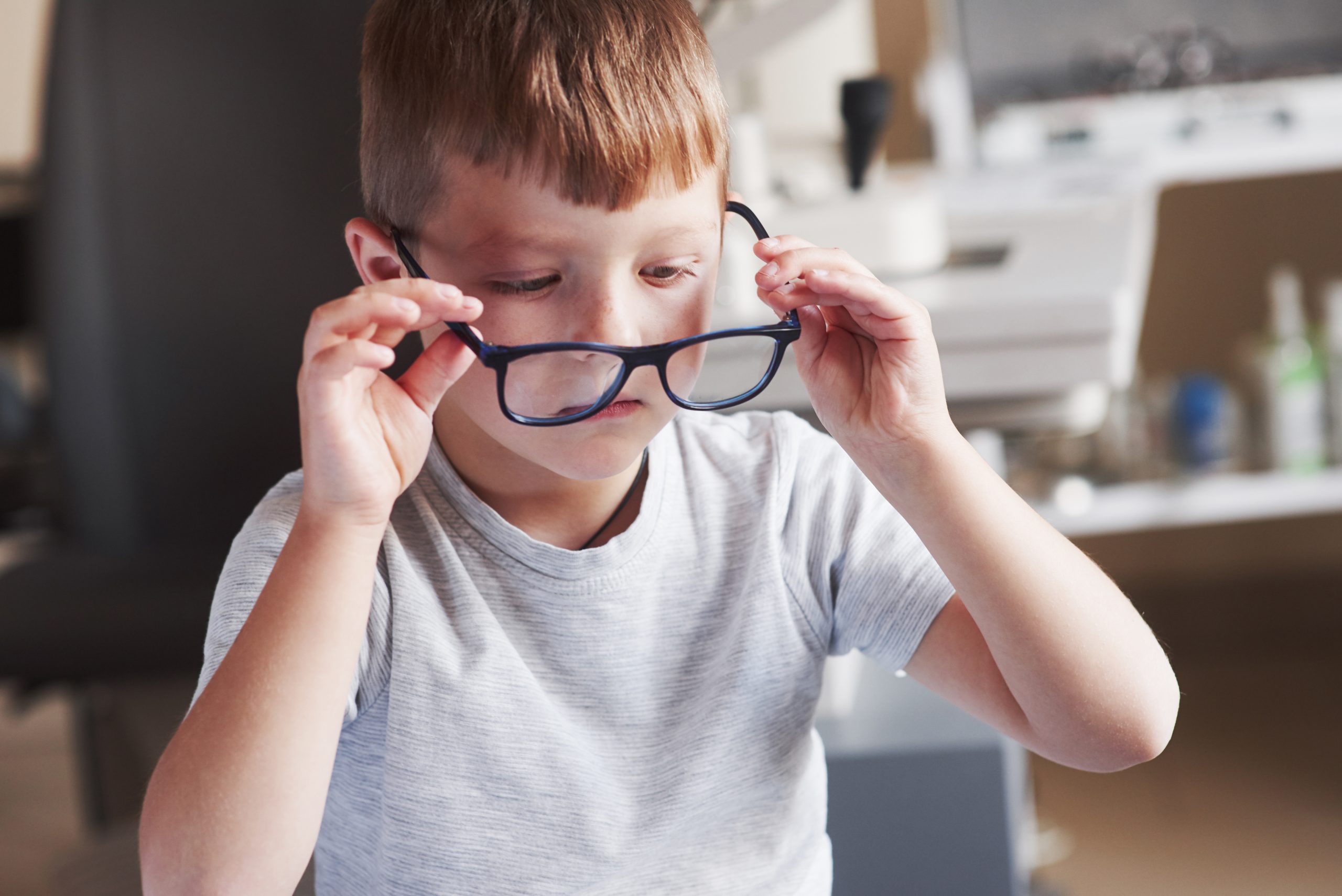
Myopia is one of the most common vision conditions, and you probably already know how it manifests: objects at a distance appear blurry, while near vision remains clear.
Ce este important de înțeles este că miopia nu rămâne întotdeauna la fel, ci evoluează în timp, What is important to understand is that myopia does not always remain stable, but tends to progress over time, especially during childhood and adolescence. Today, however, we are no longer talking only about correcting myopia, but also about methods that can slow its progression when it is properly monitored and managed.
When does myopia appear? So-called “school myopia” usually appears around the age of 6–7. From there, it can gradually progress, with periods of faster increase, especially between the ages of 8 and 12. The eye continues to develop during adolescence, and in approximately 75% of cases, myopia stabilizes around the age of 18.
What about adults? Although less common, myopia can continue to progress after adolescence. In some cases, it may appear or worsen between the ages of 18 and 25, and sometimes even up to around 30.
Why does it occur? There are several factors involved, but today we increasingly see a clear link with lifestyle: time spent indoors and near-vision activities (reading, phone use, tablet, laptop). All of these constantly strain the eyes and can contribute to the onset or progression of myopia.
What happens to the myopic eye?
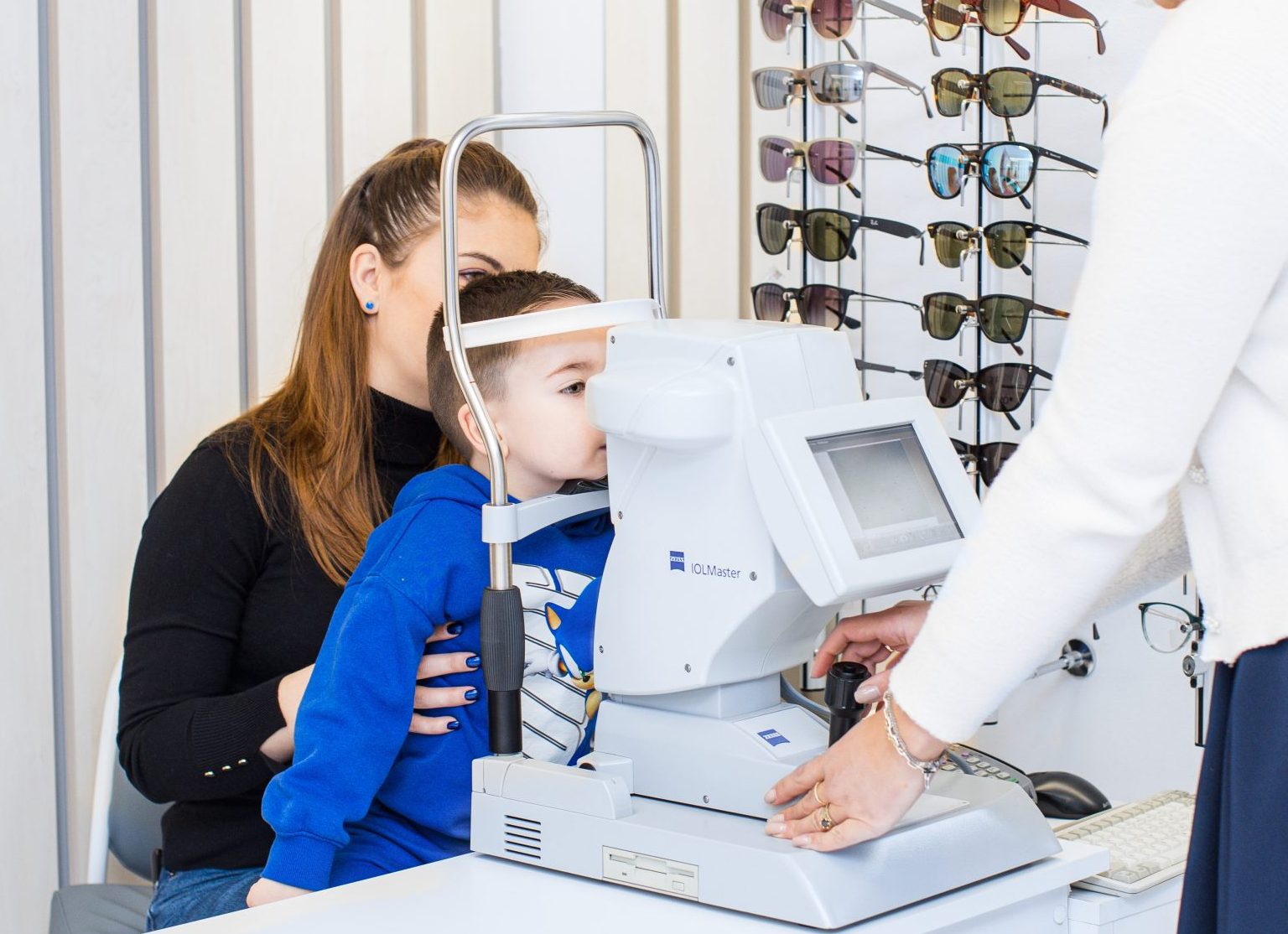
A myopic eye has a longer axial length than a normal eye. Axial length represents the distance between the front and the back of the eye and is measured in the clinic through biometry.
This increase occurs when the eye develops at a faster rate than usual. As myopia progresses, the eye continues to elongate.
When myopia appears at an early age, choosing a management method becomes important from the very beginning, as progression can be faster.
Myopia cannot be cured or reversed, and once the eye has elongated, this process cannot be undone. For this reason, monitoring and timely intervention play a very important role in long-term outcomes.
What does myopia management actually mean?
Myopia management means more than simply wearing glasses or standard contact lenses to see clearly; it refers to the methods used to slow down its progression, especially in children, so that the prescription does not increase rapidly over time. These methods are selected based on each individual case and may include:
Myopia control spectacle lenses (special optical design)
Personalized lenses designed to provide clear vision in all directions and at all distances, while limiting myopia progression.
Soft contact lenses for children
Designed with a special optical pattern, based on concentric rings, which helps control the progression of myopia.
Rigid contact lenses worn overnight (orthokeratology)
These gently reshape the curvature of the cornea during sleep, so that vision remains clear throughout the day without glasses or contact lenses.
Atropine eye drops
They help slow down eye growth, the process underlying myopia progression. As a result, they can reduce the rate at which the prescription increases over time.
Specialized lenses for children can slow down myopia progression by approximately 30–50% when properly selected and used.
Each patient is assessed individually, as myopia progression differs from one person to another and there is no universal solution.
Why is myopia management important?
First of all, because it helps us gain control over how the eye evolves. In daily practice, we don’t look only at the prescription, but especially at the axial length of the eye, as this most accurately reflects myopia progression.
If we focus strictly on diopters, myopia can sometimes progress quite quickly, even by around 0.25 diopters every six months. For this reason, the earlier a child is diagnosed, the higher the chances that myopia may reach higher values over time, including high myopia (over -6 diopters).
Another important aspect is related to long-term eye health. Through myopia management, we can reduce the risk of developing eye conditions associated with high myopia, which can affect vision over time.
For myopia management to be effective, consistent monitoring is essential.
Regular check-ups, usually every 6–12 months, help us track the progression of myopia and intervene in time when changes occur. Along the way, the prescription can be adjusted based on progression, so that vision remains as comfortable as possible.
At the same time, by measuring the axial length of the eye, we can assess how it develops and decide whether the chosen management method is still suitable or needs to be adjusted.
All of these aspects play an important role in maintaining long-term visual health.
Myopia is not just a vision problem, but also relates to long-term eye health, which is why it is important to monitor and manage it properly.
At Best Optic, our optometrists are certified in myopia management and have over 25 years of experience in the field, with more than 15 years dedicated specifically to myopia management and orthokeratology.
If you want to better understand how your child’s vision evolves and what options are available, we invite you to a consultation where we can discuss and choose the right solution together.
